Top 10 MEV Bot Mistakes That Drain Capital in…
**Answer first** — Most MEV bots that fail in 2026 don't fail because the strategy was wrong. They fail because the operator made one of ten mistakes during configuration or operat
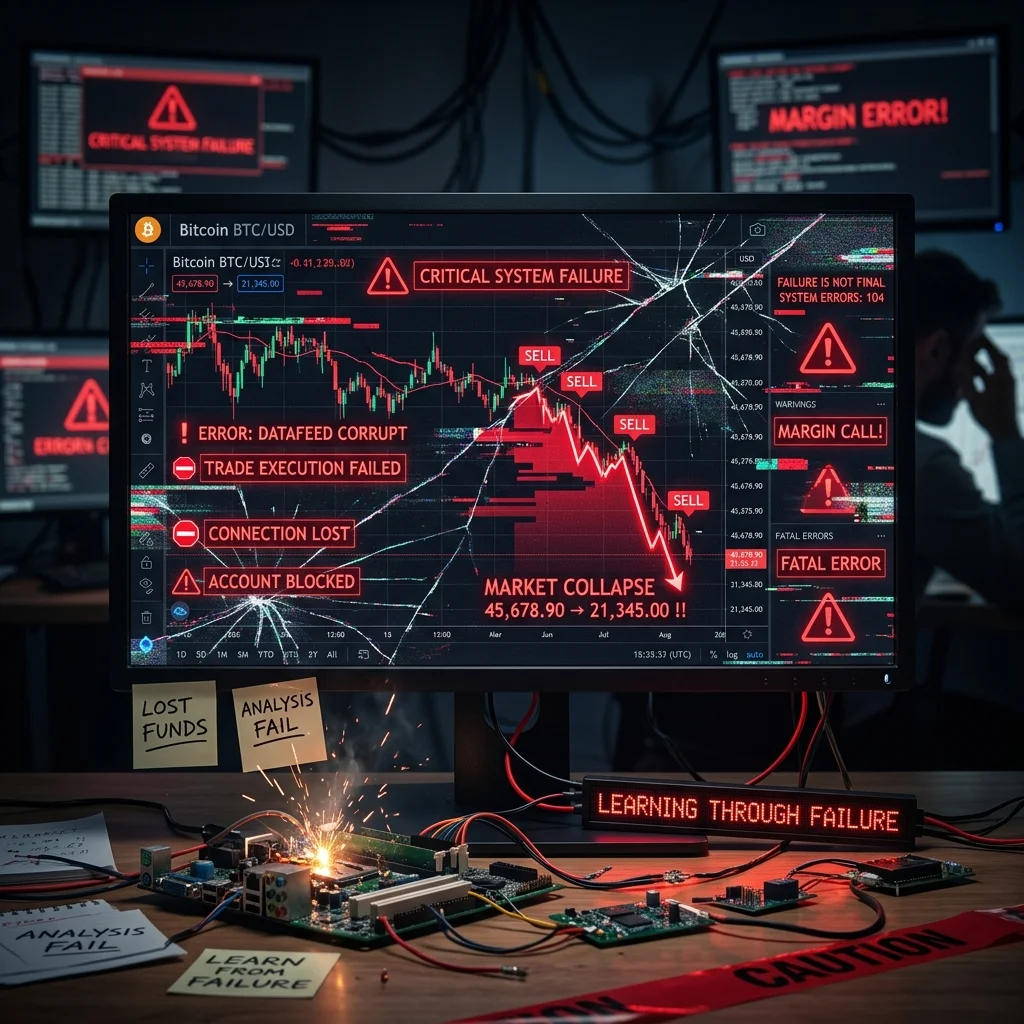
Answer first — Most MEV bots that fail in 2026 don't fail because the strategy was wrong. They fail because the operator made one of ten mistakes during configuration or operation. The good news: nine of them are fixable in under an hour once you know to look. This article is the checklist that survives the first 90 days.
#1 — Running Live Before Paper-Trading
Every successful operator we surveyed paper-traded for 1–4 weeks before live capital. Every operator who blew up in week 1 went straight to live.
Fix: Paper-trade mode in FRB Agent for 14 days minimum. Look for:
- Strategy hitting expected fill rate
- Bundle simulation success rate >85%
- Predicted vs realized P&L within 25%
If any of those don't line up, don't go live.
#2 — Slippage Caps Set By Vibes
Slippage caps protect you from sandwiches and bad fills. Caps too tight = rejected good fills. Caps too loose = you become the prey.
Fix: Measure the slippage distribution of your target chain's swaps. Set cap at the 75th percentile of successful fills, not the 99th percentile. Re-tune monthly.
See Slippage Budget Caps & Risk Guards.
#3 — Single Chain, Single Strategy, Single Pair
Concentration is the most common path to ruin. A single pair can stop trading; a single chain can have a sequencer outage; a single strategy can become unprofitable for weeks.
Fix: Minimum diversification:
- 2 chains (e.g. Base + Arbitrum)
- 2 strategy modules (e.g. atomic arb + JIT)
- 5+ target pairs per strategy
You don't need everything at once. You do need not just one of each.
#4 — Ignoring Gas Regime Changes
Gas prices shift weekly. Your bot uses last week's gas assumptions. Bundles that were profitable yesterday revert today because the gas tax changed.
Fix:
- Auto-adjust gas budget based on rolling 24h baseline.
- Alert on regime change >40%.
- Stress-test strategy at 2x current gas. If it doesn't survive, tighten thresholds now.
#5 — Treating Bundle Failures as Random Noise
A bundle failure rate above 15% is a signal. It usually means:
- You're losing the bid auction (raise bid)
- Your simulation is stale (state changes mid-block)
- Your bundle includes too many txs (split it)
- Your slippage cap is breached after build (rebuild later in slot)
Fix: Read Fixing Failed Bundles and Private Bundle Debugging. Diagnose specific failure type; don't just retry harder.
#6 — No Drawdown Budget
Operators run live with 100% of capital deployed and zero reserve. The first 8% drawdown wipes out a week of gains. The first 20% drawdown leaves no margin for recovery.
Fix: Reserve 15–20% of bankroll as untouchable drawdown buffer. When working capital draws down 8%, halve position size automatically. When it draws down 15%, pause and diagnose.
This is in the Risk Management for MEV Trading Bots playbook.
#7 — Wallet Hygiene Failures
Using a single hot wallet for everything — gas, strategy capital, withdrawals, savings. One leak and everything is gone.
Fix: Wallet structure:
- Strategy wallet: only enough capital for ~1 week of gas + working size
- Treasury wallet: bulk of bankroll, hardware-secured, never signs strategy txs
- Withdrawal sweep: profits flow from strategy → treasury weekly
See Wallet Hygiene for MEV Traders.
#8 — VPS in the Wrong Region
Running your bot on a VPS in Singapore while your strategy targets US-East order flow adds 150ms+ to every decision. You will lose every race.
Fix: Match VPS region to:
- Your sequencer's geography (Base sequencer is US, so co-locate US)
- Your relay's primary region (Flashbots: Frankfurt, Northern Virginia)
- Your DEX flow's center of mass
For Ethereum L1, Frankfurt or Northern Virginia. For Solana, Frankfurt or Tokyo. For Base, US-East.
#9 — Not Monitoring The Bot
The bot runs while you sleep. That doesn't mean it runs unsupervised. Things that go wrong silently:
- WSS disconnects (no fills for hours, you don't notice)
- Wallet runs out of gas (every attempt reverts)
- A pair stops trading (all opportunities miss)
- VPS reboots and loses connection state
Fix: Alert on:
- WSS disconnect lasting >60s
- Gas balance below 1-day buffer
- Zero fills in any 4h window during peak
- Bundle success rate drop >15% in any 1h window
FRB Agent emits these alerts to email or Telegram — enable them.
#10 — Revenge-Trading the Bot
After a bad day, the operator gets in and overrides risk controls — bigger position, looser slippage, single-pair concentration. The next day is worse, and the cycle compounds.
Fix: When the bot has a bad week, don't override. Either:
- Pause and diagnose
- Halve position size
- Switch to paper-trade until you understand the loss
Risk overrides made out of frustration are the largest single source of catastrophic loss in our user data.
The Honorable Mentions
Not in the top 10 but close:
- Mixing custodial and non-custodial flow. Telegram bots holding your keys + a desktop bot signing the same wallet = double-spend conditions and counterparty risk.
- Running outdated bot versions. Strategy modules ship security patches; running 6-month-old code is risk amplification.
- Skipping the paper-trade phase after a strategy update. Even small changes can break behavior. Re-paper-trade after every meaningful update.
- Not exporting fill history. When asked "why did this happen," the answer is in the logs. Export weekly to your own storage.
The Self-Audit (Run This Now)
- Have I paper-traded for 14+ days? □
- Are my slippage caps based on data, not vibes? □
- Am I running ≥2 chains and ≥2 strategies? □
- Is gas auto-adjusted? □
- Is bundle failure rate <15%? □
- Do I have a drawdown reserve set aside? □
- Are strategy and treasury wallets separated? □
- Is my VPS in the right region? □
- Are alerts enabled and reaching me? □
- Do I have a written rule against revenge-trading? □
Fewer than 8 boxes ticked = you have specific homework before scaling.
FAQ
How long until I'm past these mistakes?
The first six are typically resolved by week 4. The last four are operator discipline that takes months and never fully ends.
Will FRB Agent prevent these mistakes?
Many of them — defaults are tuned to avoid the worst configurations, and the dashboard surfaces alerts. But operator discipline (#10) is on you.
What's the single most expensive mistake?
Across our user data: revenge-trading (#10). It accounts for ~40% of catastrophic losses despite being preventable by a single rule.
Is one mistake enough to blow up?
Rarely a single mistake. Catastrophic losses are usually 2–3 of these stacked: e.g. concentrated chain + no drawdown reserve + revenge trade.
Can I skip the paper-trading if I'm experienced?
Experienced operators still paper-trade after major changes. The 14-day rule is for new strategies, not new operators.
Related Reading
- Risk Management for MEV Trading Bots
- Crypto Trading Bot Security Best Practices
- Slippage Budget Caps & Risk Guards
- How Long Until MEV Is Profitable
- How to Backtest a MEV Strategy
This article reflects patterns observed across FRB user telemetry and public incident reports. Your situation may differ. Not financial advice.
Related Articles
Further reading & tools
Discussion
No notes yet. Add the first observation, or share the link with your team on X (@MCFRB).