Гигиена кошелька для трейдеров MEV:…
**Краткий ответ** — Трейдеру MEV необходимо как минимум три уровня кошелька: *кошелек горячей стратегии* (маленький плавающий кошелек, подписывает каждую транзакцию, живет на вашем
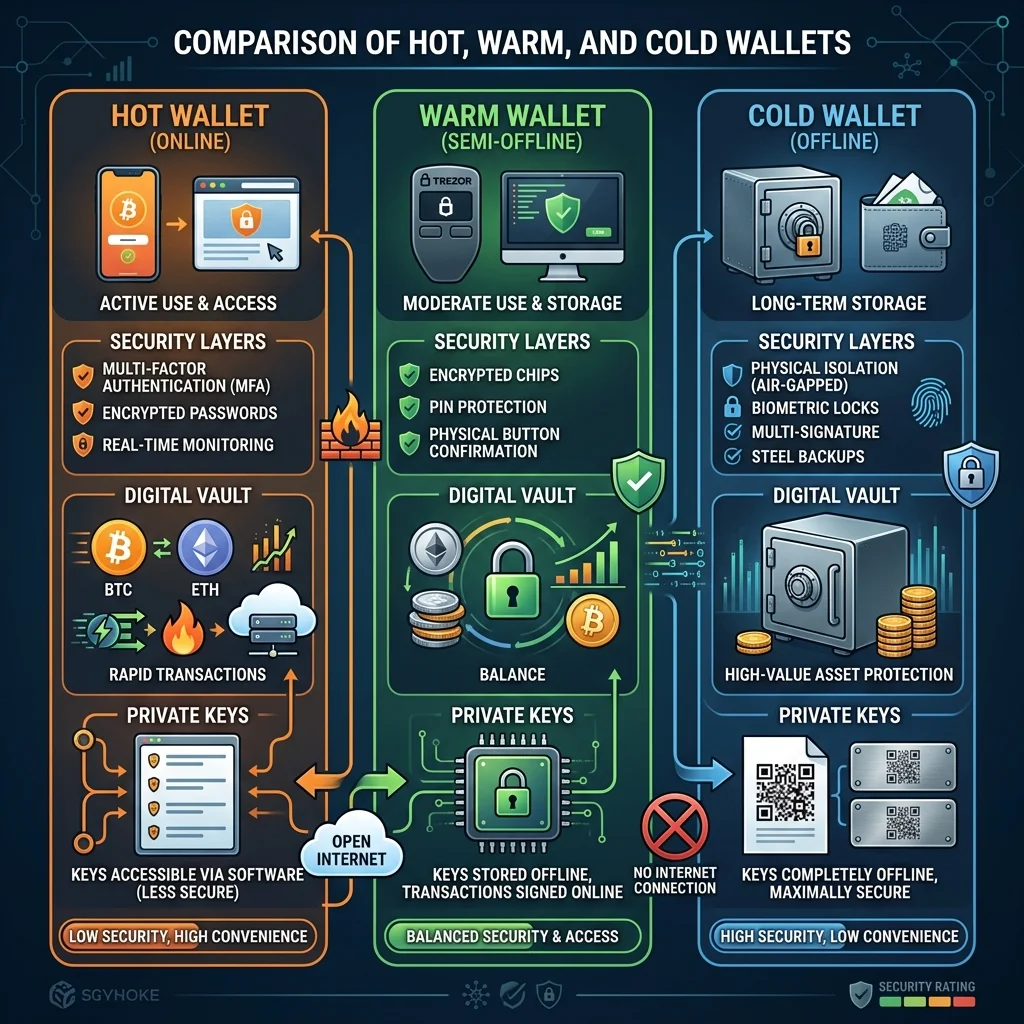
Краткий ответ — Трейдеру MEV необходимо как минимум три уровня кошелька: кошелек горячей стратегии (маленький плавающий кошелек, подписывает каждую транзакцию, живет на вашем VPS), теплый казначейский кошелек (объемный капитал, аппаратно защищенный, подписывает только операции и пополнения) и холодный резерв (долгосрочные активы, никогда не подписывает ничего действующего). Любой, кто использует все с одного горячего кошелька, находится в одном компромиссе с VPS от полной потери. Настройка занимает 30 минут; альтернатива — платить за эти 30 минут пятизначными цифрами.
Если вы еще не читали Рекомендации по безопасности крипто-торгового бота, сделайте это сначала. Эта статья — подробный разбор именно по кошелькам.
Почему операции с единым кошельком терпят неудачу
Типичный сценарий компромисса:
- Оператор запускает Агент FRB на VPS.
- Бот подписывает каждое пополнение из того же кошелька, в котором хранится весь банкролл.
- VPS скомпрометирован — из-за украденного SSH-ключа, отравленной зависимости или вредоносного обновления пакета.
- Злоумышленник считывает приватный ключ кошелька из конфигурации бота.
- Весь банкролл слит одним блоком.
Шаг 4 — это точка отказа, которую предотвращает гигиена кошелька. Горячий кошелек никогда не должен подвергаться риску материального капитала.
Трехуровневая архитектура
┌─────────────────────┐
│ Cold Reserve │ Hardware-only, never online
│ (>50% of stack) │ Multisig, ideally
└─────────┬───────────┘
│ Manual transfer (rare)
▼
┌─────────────────────┐
│ Warm Treasury │ Hardware-secured, signs sweeps + top-ups
│ (35–45% of stack) │ Online but inactive between operations
└─────────┬───────────┘
│ Top-up: weekly
│ Sweep: weekly
▼
┌─────────────────────┐
│ Hot Strategy │ On VPS, signs every fill
│ (5–15% of stack) │ Limited to ~1 week of working capital
└─────────────────────┘
Пропорции настраиваются. Разделение — нет.
Правила кошелька Hot Strategy
Кошелек, от имени которого подписывает ваш бот. Настройте его так, чтобы минимизировать радиус поражения при компрометации:
- Никогда не пополняйте его суммой больше недельного оборотного капитала. При компрометации теряется одна неделя, а не весь банкролл.
- Нет одобрения токенов для незнакомых контрактов. Используйте инструменты отзыва одобрения еженедельно.
- Изоляция по стратегиям, если это возможно. Разделение кошельков для ликвидаций и арбитража означает, что ошибка в одном не истощает другой.
- Уникальная пара ключей, созданная специально для VPS. Никогда не используйте повторно ключ с другого компьютера.
- Резервное копирование: да, но зашифрованное и автономное. Сфотографированная исходная фраза не является резервной копией.
Правила кошелька Warm Treasury
Средний уровень — крупный капитал, но онлайн и готовый пополнить горячий кошелек.
- Аппаратный кошелек (Ledger, Trezor, GridPlus). Мнемоника никогда не вводится в программное обеспечение.
- Отдельная исходная фраза, отличная от холодного резерва. Компрометация теплого кошелька не должна раскрывать холодный.
- Для подписания требуется физическое подтверждение. Никаких сеансов «подписи чего-либо».
- Подключается только во время работы. Отключается между пополнениями.
- Направления из белого списка. Пополнения поступают только на адрес вашего горячего кошелька.
Правила холодного резерва
Долгосрочный капитал. Относитесь к нему так, как будто на него нельзя тратить деньги.
- Мультиподпись, где это возможно. 2 из 3 или 3 из 5 с географическим распределением подписантов.
- Никакого онлайн-разоблачения. Закрытые подписи при любом движении.
- Документированный путь восстановления. Где исходные данные? Кто знает? Что произойдет, если вы станете недееспособным?
- Периодические тренировки по восстановлению. Хотя бы раз в год подтверждайте, что можете провести транзакцию с холодного резерва без раскрытия сид-фраз.
- Нет воздействия на DeFi. Холодный резерв находится в собственных активах (ETH, BTC, SOL, стейблкоины), а не в позициях LP.
Хранение ключей: что на самом деле работает
Избегать:
- Открытые текстовые ключи в файлах JSON на VPS.
.envфайлов зафиксировано в любом репозитории- Расширения браузера на той же машине, что и бот
- Менеджеры паролей с облачной синхронизацией в качестве единственной копии
Использовать:
- Хранилище ключей на уровне ОС (Keychain в macOS, Windows DPAPI) для горячих кошельков
- Аппаратные кошельки для тепла
- Подпись с воздушным зазором для холода
- Зашифрованная резервная копия на USB-накопителе с аппаратным шифрованием, хранящемся в отдельном физическом месте.
Агент FRB по умолчанию хранит ключи горячего кошелька через хранилище ключей ОС — реализацию см. в разделе Безопасность.
Гигиена одобрений
Одобрения токенов — это то, через что происходит 80% инцидентов вида «меня взломали». Схема такая:
- Вы утверждаете контракт на использование маршрутизатора с неограниченными расходами.
- Маршрутизатор имеет уязвимость или заменен через обновление прокси.
- Злоумышленник опустошает ваш кошелек, используя постоянное одобрение.
Меры защиты:
- Используйте ограниченные одобрения (
amount = 2 × expected_trade_size), а неMAX_UINT. - Отзывайте одобрения еженедельно через Revoke.cash или аналогичный сервис.
- Никогда не одобряйте непроверенные контракты.
- Проверяйте список одобрений для каждого кошелька ежемесячно.
Ротация кошелька
Ежеквартальная ротация ключей горячего кошелька:
- Создайте новую пару ключей.
- Обновите конфигурацию агента FRB.
- Переместите старый кошелек в теплую казну.
- Сжечь старый ключ (удалить из всех резервных копий).
- Возобновите операции на новом кошельке.
Ротированный кошелек, если он скомпрометирован, не раскрывает никакого капитала. Горячий кошелек, которому 12 месяцев, раскрывает накопленные за 12 месяцев одобрения и любой забытый капитал.
Безопасность VPS (половина без кошелька)
Гигиена кошелька работает только в том случае, если сам VPS не скомпрометирован:
- Только аутентификация по ключу SSH. Без входа по паролю.
- Брандмауэр ограничивает только необходимые исходящие порты. Блокирует боковое перемещение.
- Автоматические обновления безопасности.
- Никаких других рабочих нагрузок на том же VPS. Особенно браузерных.
- Мониторинг: оповещение о появлении любого процесса, не являющегося агентом FRB.
- Снимок перед развертыванием. Мгновенный откат в случае аномалии.
Полную настройку см. в Настройка VPS для крипто-ботов.
Мультиподпись для казначейства (рекомендуется от 50 000 долларов США)
Свыше 50 тысяч долларов мультиподписайте теплую казну:
- Safe (ранее Gnosis Safe) является стандартом.
- 2 из 3: вы, аппаратный кошелек и ключ восстановления, принадлежащий доверенной третьей стороне.
- Или 3 из 5 с географическим распределением, если вам нужна максимальная устойчивость.
Стоимость: ~5–20 долларов США за мультиподписную транзакцию. Оно того стоит.
Что происходит, когда что-то идет не так
Если вы подозреваете компромисс:
- Немедленно остановите работу бота. Не пытайтесь «торговать через» подозрение.
- Перемещайте теплый и холодный капитал в новые кошельки. Используйте только аппаратную подпись.
- Исследуйте VPS. Проверьте наличие неожиданных процессов, измененных двоичных файлов и новых ключей SSH.
- Поменяйте каждый ключ, к которому может получить доступ VPS.
- Криминалистика: перенос журналов на отдельный компьютер для проверки.
Скорость имеет значение. Первые 30 минут после обнаружения определяют, выживет ли теплый капитал.
Упражнения по восстановлению
Вы должны быть в состоянии:
- Восстановите горячий кошелек за 10 минут (низкие ставки, легко)
- Восстановление теплого кошелька за 1 час аппаратным способом (умеренно)
- Восстановление холодного резерва за 4–24 часа (намеренно высокое сопротивление)
Если вы никогда не тестировали, вы на самом деле не знаете. Ежеквартально запускайте проверку восстановления с 1 долларом США в каждом кошельке, чтобы проверить путь.
Часто задаваемые вопросы
Нужен ли мне аппаратный кошелек для капитала для горячих стратегий?
Нет — горячие кошельки должны подписывать автоматически, а это не работает с аппаратными кошельками. Ключи горячего кошелька хранятся в хранилище ключей ОС. Аппаратные кошельки предназначены для теплого и холодного уровней.
Может ли агент FRB подписывать с помощью аппаратного кошелька?
Не для активного исполнения стратегии (задержка делает это непрактичным). Только для периодических пополнений, которые можно инициировать с панели управления с помощью аппаратного кошелька.
Всем ли нужна мультиподпись?
При банкролле ниже $50 тыс. операционная сложность мультиподписи перевешивает выигрыш в безопасности для большинства пользователей. Выше 50 тысяч долларов расклад меняется.
А как насчет кошельков MPC (Fireblocks, Copper и т. д.)?
Отлично подходят для институциональных игроков. Как правило, избыточны (и переоценены) для частных операторов с капиталом ниже семизначных сумм.
Как часто следует менять ключи?
Горячий: минимум раз в квартал. Теплый: раз в год. Холодный: только после подозрения на компрометацию или смены подписанта.
Связанное чтение
- Лучший кошелек для MEV Traders 2026
- EIP-7702 MEV 2026: абстракция учетных записей меняет стратегию поиска
- Лучшие методы обеспечения безопасности криптоторговых ботов
- 10 главных ошибок ботов MEV
- Революция безопасности: настольный компьютер против Telegram
- Настройка VPS для крипто-ботов
- Доверие и проверка FRB
Эта статья представляет собой оперативное руководство, а не аудит безопасности. Конкретные риски зависят от вашего стека, юрисдикции и модели угроз. По поводу дорогостоящих настроек проконсультируйтесь со специалистом по безопасности.
Похожие статьи
Дальнейшее чтение и инструменты
Обсуждение
Примечаний пока нет. Добавьте первое наблюдение или поделитесь ссылкой со своей командой на X (@MCFRB).