JIT-ликвидность 2026: механика, математика и риск
**Краткий ответ** — just-in-time (JIT) liquidity добавляет позицию концентрированной ликвидности непосредственно вокруг целевого swap и удаляет ее после него. Позиция может получит
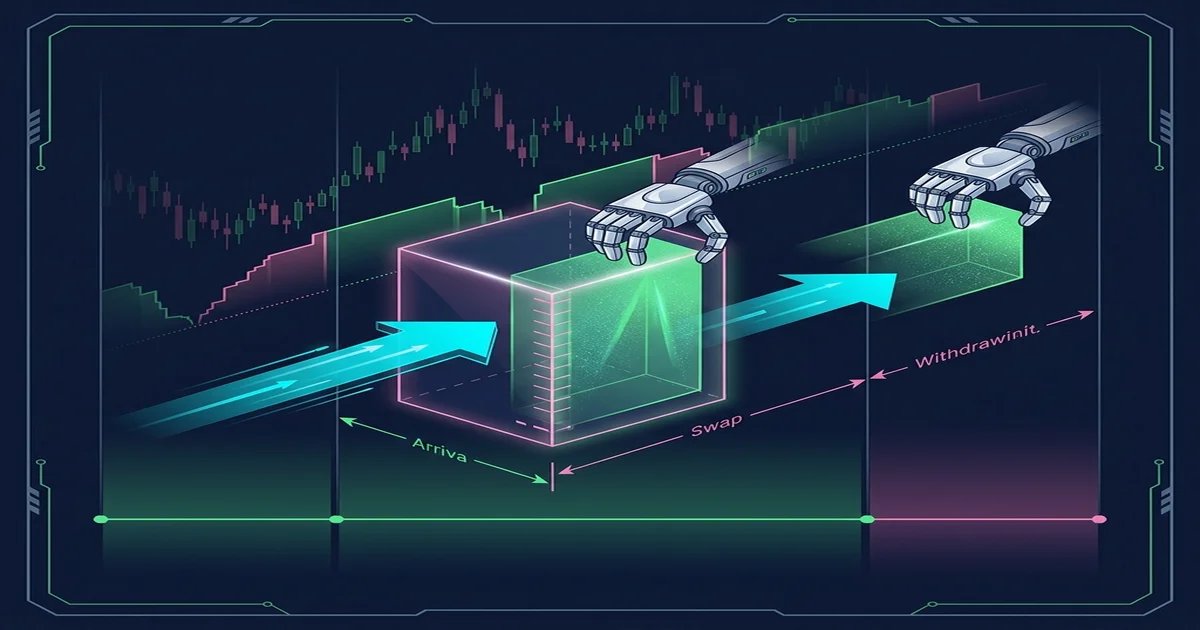
Краткий ответ — just-in-time (JIT) liquidity добавляет позицию концентрированной ликвидности непосредственно вокруг целевого swap и удаляет ее после него. Позиция может получить часть комиссии, но принимает риск инвентаря, gas, порядка и adverse selection. Корректная оценка использует фактическую математику пула и учитывает все затраты; фиксированные пороги капитала, месячные доходы и гарантированное получение комиссии нельзя обосновать без воспроизводимого набора данных.
Последовательность исполнения
Концептуальный процесс JIT:
- Обнаружить целевой swap и прочитать текущее состояние пула.
- Выбрать диапазон ticks, активный во время swap.
- Рассчитать объемы двух токенов для mint позиции.
- Симулировать
mint -> целевой swap -> burn/collectв нужном порядке. - Отправить через маршрут, поддерживающий требуемый порядок.
- Подтвердить конечное состояние и ребалансировать полученный инвентарь.
Если целевая транзакция изменится, не появится или пройдет вне ожидаемого диапазона, позиция может получить меньше комиссии или остаться открытой к движению цены.
Математика доли комиссии
Обозначим:
F— комиссия, созданная целевым swap в активном диапазоне;P— существующая активная ликвидность;J— JIT-ликвидность, активная для swap.
Упрощенная доля:
валовая доля JIT = F * J / (P + J)
Это учебное приближение. Реальный расчет должен учитывать переходы между ticks, изменение ликвидности по ticks, exact input или output, округление, protocol fee и фактические объемы токенов для позиции.
Чистый результат:
чистый результат =
собранные комиссии
+ стоимость выведенного инвентаря
- стоимость внесенного инвентаря
- gas mint, burn, collect и ребаланса
- платеж builder или маршруту
- slippage и adverse selection
- стоимость неудачных попыток
- стоимость финансирования капитала
Состав токенов при выводе часто отличается от внесенного. Учет только комиссий без изменения инвентаря завышает результат.
Почему нужна симуляция
JIT зависит от порядка и состояния пула. Симуляция должна подтвердить:
- позиция активна во время целевого swap;
- после добавления ликвидности целевой swap остается действительным;
- все вызовы проходят в нужном порядке;
- конечные балансы совпадают с моделью учета;
- пакет или транзакция имеют безопасное условие отказа;
- approvals, deadlines, slippage и gas limits заданы явно.
Симуляция не является гарантией. Другое изменение состояния, решение о порядке или невключение могут сделать результат недействительным.
Основные риски
Риск порядка
Mint должен пройти до целевого swap, а выход — после. Если маршрут не обеспечивает этот порядок, позиция может принять риск без ожидаемой комиссии.
Риск инвентаря
Swap меняет состав токенов позиции. Оператору может потребоваться ребалансировка по худшей цене, и ее стоимость способна превысить комиссию.
Adverse selection
Крупный swap может быть информированным потоком, частью другого арбитража или реакцией на движение цены на другом рынке. LP может получить актив, который затем движется против него.
Устаревшее состояние
Активная ликвидность, tick, fee growth, цена и gas могут измениться между обнаружением, симуляцией и исполнением.
Контракты и approvals
Создание концентрированной позиции требует взаимодействия с пулом и position manager. Проверяйте адреса, token approvals, deadlines и recipient.
Приватность
Публичная JIT-транзакция раскрывает стратегию и может привлечь конкуренцию или атаки на порядок. Приватный маршрут уменьшает публичную экспозицию, но не гарантирует конфиденциальность или включение.
Воспроизводимый тест JIT
- Зафиксируйте сеть, адрес пула, fee tier и версию контрактов.
- Запишите reference block и полное состояние пула.
- Сохраните целевую транзакцию или точно заданный синтетический swap.
- Рассчитайте диапазон и необходимые объемы токенов.
- Симулируйте последовательность на fork reference state.
- Отдельно покажите внесенные и выведенные токены.
- Включите весь gas и платежи маршруту.
- Оцените инвентарь по указанному времени и источнику цены.
- Повторите при разных условиях ликвидности и волатильности.
- Публикуйте отказы и исключения вместе с успехами.
Метод подтверждает утверждение только о измеренной выборке. Он не устанавливает ожидаемую доходность другого оператора, пула или периода.
Таблица решения
| Вопрос | Доказательство до исполнения |
|---|---|
| Позиция будет активна? | Расчет диапазона на свежем состоянии |
| Порядок обеспечен? | Семантика пакета или транзакции и симуляция |
| Комиссия рассчитана полностью? | Расчет fee на уровне ticks |
| Риск инвентаря ограничен? | Конечные балансы и политика ребаланса |
| Попытка безопасно завершается при сбое? | Атомарный revert или явный unwind |
| Маршрут приватен? | Документация провайдера и наблюдаемый цикл |
| Кандидат положителен после затрат? | Полный журнал, а не только fee income |
Место FRB
FRB Agent сейчас сосредоточен на поддерживаемых процессах атомарного арбитража и ликвидаций. Он не заявляет производственную стратегию JIT-ликвидности. Для JIT нужны управление концентрированными позициями, видимость целевого потока, учет по ticks и движок ребалансировки. Принципы симуляции и учета риска применимы к оценке любого атомарного процесса.
FAQ
JIT-ликвидность является sandwich-атакой?
Она может использовать трехчастную последовательность вокруг целевого swap, но экономический эффект и классификация зависят от реализации и потока. Оператор должен учитывать влияние на пользователя, правила протокола и применимые правовые обязанности.
Больше JIT-ликвидности всегда означает больше комиссий?
В упрощенной формуле доля растет с J, но одновременно меняются инвентарь, диапазон, переходы ticks, gas и риск ребаланса. Валовая комиссия не равна чистой прибыли.
Приватный order flow гарантирует включение?
Нет. Политика провайдера, выбор builder, конкуренция, действительность транзакции и состояние сети влияют на включение и порядок.
Подходит ли JIT для фиксированной суммы капитала?
Универсального порога нет. Инвентарь зависит от состояния пула, диапазона, цен, размера цели и желаемой доли ликвидности. Рассчитывайте его для каждого кандидата.
Первичные источники
Похожие статьи
Дальнейшее чтение и инструменты
Обсуждение
Примечаний пока нет. Добавьте первое наблюдение или поделитесь ссылкой со своей командой на X (@MCFRB).