Profitability vs Risk: Gas & Budget Caps That Work
**Answer first** — Maximizing MEV profitability in 2026 requires a **bounded-loss model** where gas bribes never exceed 90% of expected value. By utilizing the FRB Profitability Ca
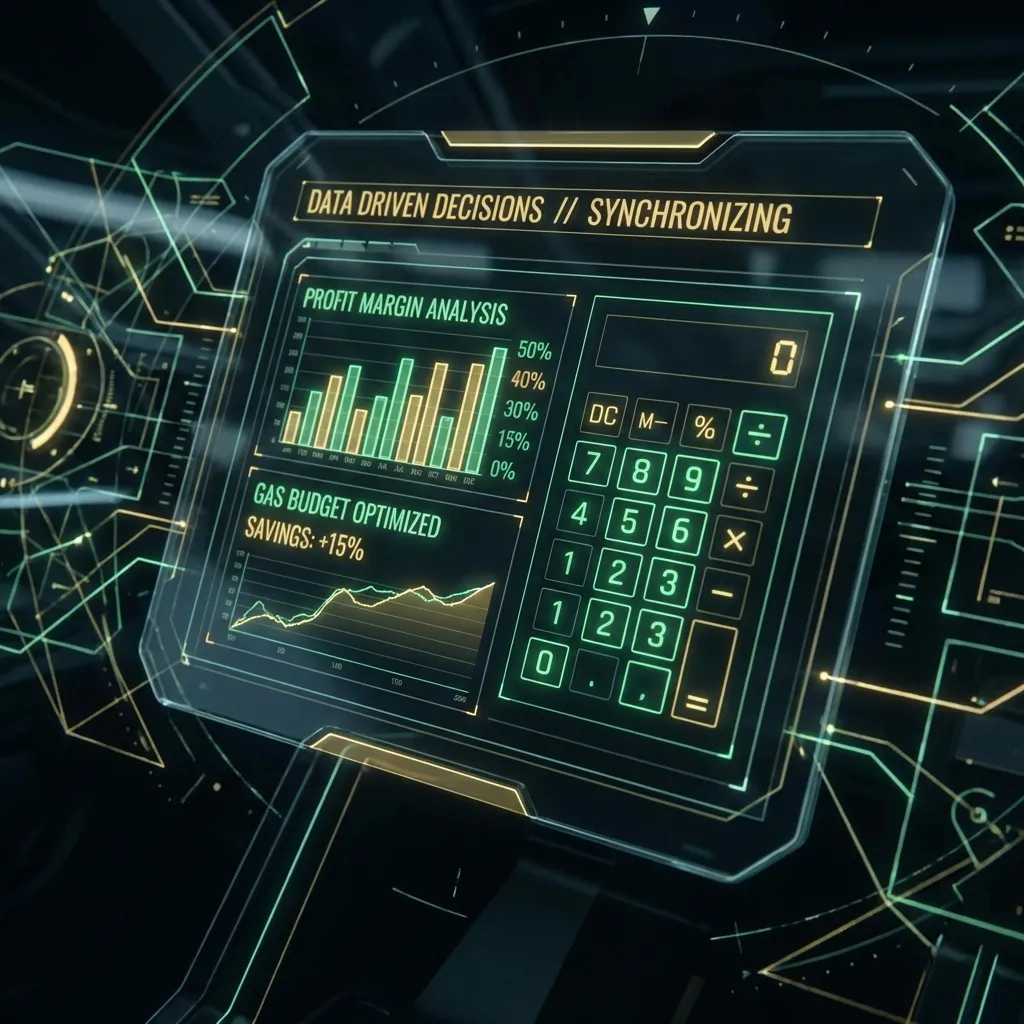
Answer first — Maximizing MEV profitability in 2026 requires a bounded-loss model where gas bribes never exceed 90% of expected value. By utilizing the FRB Profitability Calculator and session budgets, operators can maintain a stable reward-to-risk ratio, ensuring that high-gas congestion periods or failed inclusion attempts (misses) don't erode the core capital of the trading desk.
Mastery Path: MEV Fundamentals & Strategy
- What is MEV?
- Inclusion Probability
- Fixing Failed Bundles
- Profitability vs Risk (Current)
- Slippage & Budget Guards
Principles
- Cap downside first; size upside gradually.
- Use canary sizes on new routes.
- Track realized vs target slippage and cost.
The Expected Value Framework
Every MEV trade is a probabilistic bet. Before committing capital, model it explicitly:
EV = (Gross Profit − Gas − Builder Tip − Slippage) × P_inclusion
− (Gas_on_failure × (1 − P_inclusion))
On private relay paths (eth_sendBundle, Jito bundles), Gas_on_failure = 0 — failed bundles don't land on-chain and don't burn gas. This makes the formula simpler:
EV ≈ (Net Profit) × P_inclusion
Which means raising P_inclusion is the highest-leverage action when using private relays. A bundle with $50 net profit and 80% inclusion is worth more than a $70 net profit bundle at 40% inclusion: $40 EV vs $28 EV.
Chain-Specific Gas Behavior
Gas costs vary enormously across chains. Budget caps must be set per-chain — copying Ethereum caps to Solana or Polygon will either miss opportunities (too conservative) or blow budgets (too generous).
| Chain | Typical Gas Per Trade | P95 Congestion Gas | Private Relay? | Notes |
|---|---|---|---|---|
| Ethereum L1 | $8–$40 | $80–$200 | ✅ Flashbots | Highest variance; blobs compress data fees |
| Arbitrum | $0.10–$1.50 | $5–$10 | Partial | Sequencer batching limits peak congestion |
| Base | $0.05–$0.80 | $3–$8 | Partial | Ultra-low base fee, similar to OP |
| Optimism | $0.05–$0.80 | $3–$8 | Partial | Same Superchain stack as Base |
| Polygon | $0.01–$0.20 | $0.50–$2 | Partial (FastLane) | Lowest gas; high sandwich competition |
| BNB Chain | $0.05–$0.50 | $2–$5 | No standard | Validators direct; limited relay coverage |
| Solana | $0.0001–$0.01 | $0.05–$0.20 | ✅ Jito bundles | Near-zero base; tip is the real variable |
Implication: A $5 gas cap makes sense on Arbitrum but will block most Ethereum L1 opportunities. Set caps per-chain in FRB's network configuration, not globally.
Step-by-Step Budgeting
Step 1 — Baseline Costs
Run the Gas Calculator with conservative inputs before every session:
- Use the P90 historical gas for your chain (not the current spot price)
- Add 20% buffer for intra-session congestion spikes
- Include builder tip in the cost model — tip is not optional on competitive routes
Step 2 — Define Per-Trade Caps
Limit gas + slippage per attempt and log them in Ops Pulse. Structure:
Max_gas_per_attempt = min(0.9 × Gross_Profit_Estimate, Chain_P90_gas × 1.5)
Max_slippage_per_trade = 0.5% for arb, 2% for liquidations, 1% for snipes
A trade that would require exceeding these caps should be skipped — the EV doesn't justify the risk.
Step 3 — Session Budget
Set a USD ceiling per route so one strategy cannot drain the desk. Example:
Session_Budget = 2% of total working capital per route per day
Kill_Switch_Trigger = 3 consecutive losses OR 5% daily drawdown
When the session budget is hit, the route pauses until the next calendar day regardless of apparent opportunities.
Step 4 — Refund Guard
Enable FRB's refund policy to pause after a configurable number of missed bundles. Consecutive misses signal that your fee model is stale, your relay has lost builder coverage, or the opportunity has been captured by faster operators. Pausing protects capital while you diagnose.
Canary Sizing Formula
Never go from simulation to full allocation directly. The canary progression:
| Stage | Allocation | Required Before Advancing |
|---|---|---|
| Simulation | 0% of budget | 24–72h clean sim run |
| Canary | 10% of budget | 50–100 successful fills |
| Partial | 25% of budget | 2 consecutive clean sessions |
| Half | 50% of budget | 2 more clean sessions |
| Full | 100% of budget | Ongoing monitoring |
If refunds spike or inclusion drops more than 20% from simulation baseline at any stage, fall back one level and diagnose before scaling again.
Sensitivity Worksheet
Run this before every route launch:
| Scenario | Gas (USD) | Expected Value | Action |
|---|---|---|---|
| Baseline | $12 | $28 | Run as planned |
| Congestion (×1.3 fees) | $15.60 | $28 | Tighten slippage, keep size |
| Stress (×2 fees) | $24 | $28 | Drop to canary, re-simulate |
| Extreme (×3 fees) | $36 | $28 | Pause route, wait for normalization |
| Tail risk (×5 fees) | $60 | $28 | Hard kill switch triggered |
Add this table to every route playbook. Know at what congestion multiple you pause before the session starts — not during it when emotions are involved.
When to Increase Allocation
Scale up only when all three conditions are met:
- Realized inclusion rate ≥ 90% of simulated inclusion rate over 48h+
- Realized profit ≥ 85% of simulated profit (accounting for slippage)
- No kill-switch events or refund-guard triggers in the last two sessions
Scaling on one good session is a common mistake. Good single-session results can reflect unusual market conditions. Two clean consecutive sessions under the same market regime provide meaningful signal.
Reporting Template
- Daily: Summarize spend vs refunds vs profit. Flag any parameter changes made intra-session.
- Weekly: Highlight inclusion rate trend, builder coverage changes, refund reason codes. Include links to /metrics and relevant chain guides.
- Monthly: Revisit all assumptions, adjust budgets to reflect current chain conditions, archive session notes to the knowledge base.
FAQ
How do I pick initial caps? Use historical P90 gas for your chain plus a 2× safety buffer on top. Update as real session data arrives — the first week of live data is far more valuable than historical averages.
Should caps differ per chain? Yes, always. Each chain's gas behavior, liquidity depth, and relay coverage differ substantially. Copying numbers blindly across chains invites losses on Ethereum (too small to compete) or wasted simulation time on Solana (too conservative to take any trade).
When should I pause a route? Immediately after three consecutive losses beyond budget, whenever the refund guard triggers a stop, or when P95 gas on your chain has increased more than 2× from your baseline model.
Who signs off on budget changes? For solo operators: document the change reason in the route playbook before implementing. For teams: route owner proposes, risk lead reviews, compliance archives with timestamp. The discipline of writing down the reason prevents impulsive cap increases during drawdown.
Related Reading
阅读后的下一步
启动 FRB 控制台
连接您的钱包,通过 6 位 PIN 码配对节点客户端,然后分配上述合约。
相关文章
延伸阅读与工具
讨论
暂无笔记。添加第一条观察,或在以下平台与团队分享链接 X (@MCFRB).