Solana
Simulated route
$124.50 model
Example
Ethereum
Private bundle
$840.12 model
Example
BNB
Liquidation test
$45.20 model
Example
Base
Arbitrage test
$12.05 model
Example
Solana
Jito bundle
$310.00 model
Example
Polygon
Route check
$8.45 model
Example
Solana
Simulated route
$124.50 model
Example
Ethereum
Private bundle
$840.12 model
Example
BNB
Liquidation test
$45.20 model
Example
Base
Arbitrage test
$12.05 model
Example
Solana
Jito bundle
$310.00 model
Example
Polygon
Route check
$8.45 model
Example
ComplianceEvaluation 阶段⏱ 5 分钟阅读

Honeypot Detection for Snipers: A 2026 Field Guide

**Answer first** — In 2026, a new-pair sniper that doesn't run honeypot detection is bankrolling rug-pull operators. The five-layer detection stack — bytecode static scan, simulate

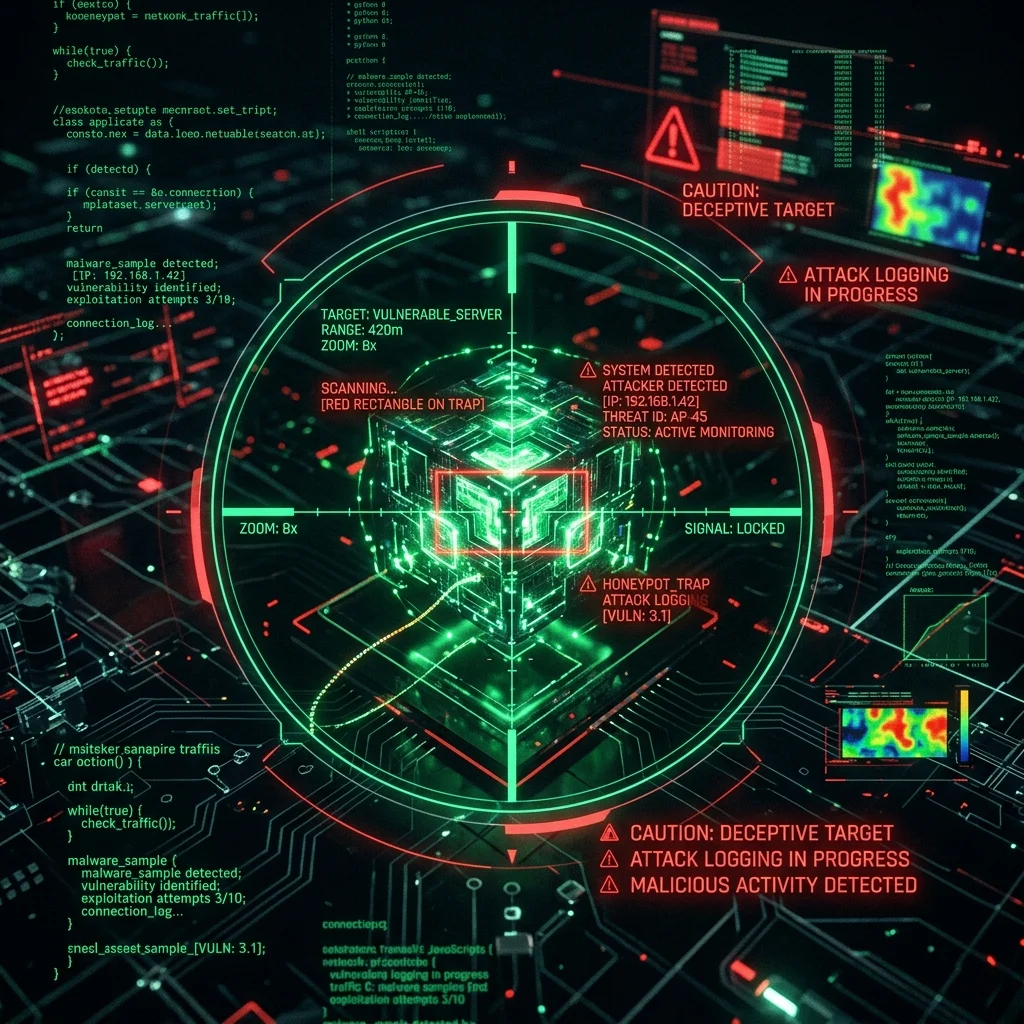
Sniper scope overlay on a token contract showing honeypot detection signals
FR
FRB 团队MEV 专家
最近更新
#Sniper#Security#Tokens#Solana#EVM

Answer first — In 2026, a new-pair sniper that doesn't run honeypot detection is bankrolling rug-pull operators. The five-layer detection stack — bytecode static scan, simulated buy-sell round-trip, transfer-tax measurement, owner-privilege analysis, and liquidity-lock verification — catches over 96% of intentional traps in our internal benchmark. FRB Agent runs this stack automatically before every snipe; if you're sniping anywhere else, you should be running it manually.

This guide covers the manual playbook, the signals each layer surfaces, and what false-positive looks like.

Why Honeypots Got Smarter in 2026

The simple "can't sell" honeypot of 2022 is dead — every basic scanner catches them. What's deployed today is harder:

  • Conditional-tax contracts that charge 0% to addresses that hold 30+ minutes and 99% to flippers.
  • Blacklist-on-buy contracts that flag a buyer's address mid-block and revert sells.
  • Owner-renounced fakes where ownership transfers to a deterministic contract that the deployer still controls via CREATE2 collision or proxy admin.
  • Liquidity-lock theater — visible 1-year locks on a tiny LP pool while the real liquidity sits in a separate, unlocked pool.
  • Approval drainers — tokens that grant unbounded approvals back to the deployer through a hidden hook in transfer().

A 2026 sniper has to detect all of these during the time window between liquidity-add and the next block. That's typically 200–2000ms.

The Five-Layer Stack

Layer 1: Static Bytecode Scan

Disassemble the contract and look for the signatures of known traps:

Pattern What It Means
tx.origin checks in _transfer Owner-only sell allowed
Conditional revert keyed on caller balance Hidden blacklist
selfdestruct reachable from non-owner Token can be killed
Proxy delegatecall to mutable implementation Logic can change post-launch
Hardcoded require(false) paths Disabled by deployer flag

Static scan is fast (<50ms) but produces false positives — many legitimate tokens use proxies. It's a filter, not a verdict.

Layer 2: Simulated Round-Trip

Fork the EVM at the latest block and:

  1. Buy a small amount.
  2. Wait one simulated block.
  3. Sell back.

Three numbers come out: bought_amount, sold_amount, gas_used. If sold_amount / bought_amount < 0.92 and the token isn't documented as having a >8% tax, it's a trap. If the sell reverts, hard reject.

This is the highest-signal check in the stack. FRB Agent runs simulated round-trips against a forked node colocated with the strategy module — see Local MEV Execution.

Layer 3: Transfer-Tax Measurement

Even when sells succeed, a tax above 25% is uneconomic for a sniper. Measure the actual tax in simulation, not the documented one. Documented "5%" tokens often have 12% buy / 18% sell once you fork-test them.

Layer 4: Owner-Privilege Surface

Enumerate every function callable only by owner, DEFAULT_ADMIN_ROLE, or ProxyAdmin. Score by danger:

Privilege Danger
Pause transfers High
Set fee/tax High
Mint new supply Critical
Blacklist arbitrary addresses Critical
Update DEX router whitelist High
Burn from arbitrary holders Critical

If "ownership renounced" is claimed but a proxy admin remains, the privileges still exist. Verify via the contract's storage slots, not the public claim.

Layer 5: Liquidity Lock Verification

Check the actual locker contract for:

  • Lock duration in absolute timestamp (not "1 year")
  • Lock owner address (transferable locks are not locks)
  • Whether the locked LP token is for the real trading pair
  • Whether multiple LP pools exist for the same token (a common decoy pattern)

Tools that just say "LP locked: yes" without checking the second-pool decoy miss a major class of rugs.

Signal Aggregation: The Composite Score

FRB Agent reduces the 5 layers to a single 0–100 confidence score. Default thresholds:

  • 0–40: Auto-reject. Do not snipe.
  • 41–70: Require manual confirmation; flagged in dashboard.
  • 71–100: Auto-execute if other strategy criteria pass.

Tune the threshold to your own risk tolerance. Aggressive snipers run at 50; conservative ones at 80.

Solana Honeypots Are Different

Solana token traps work differently because of the SPL model:

  • Freeze authority — if not renounced, the deployer can freeze any holder's token account, including yours.
  • Mint authority — if not renounced, deployer can dilute supply.
  • Transfer fees (Token-2022) — built-in tax mechanism, often hidden behind a legitimate-looking program.
  • Fake renounce — authority transferred to a multisig the deployer controls.

For Solana-specific sniping see Solana Pump.fun Sniper Bot Guide and Hunting Meme Coins on Solana.

Common False Positives (And Why)

Detection isn't free of error. Here's what triggers false positives:

  • Tax on transfer is 0% but on sell is 5% — many legitimate launch contracts. Resolve by simulating both.
  • Owner not renounced but timelocked — a 7-day timelock on owner functions is a near-renounce. Read the timelock contract.
  • Single-side liquidity — if a token launched only one pool, the "decoy pool" check fires. Verify by querying registry.
  • Proxy with public implementation — many DAO-managed tokens use proxies. Check that the proxy admin is itself a verified, audited contract (e.g. an OpenZeppelin Defender controller).

What to Do When Detection Fails

No detection is perfect. If you get caught in a honeypot anyway:

  1. Don't add more capital trying to "average down." Sells are blocked, not just unprofitable.
  2. Check whether a flash-loan-based exit exists (it usually doesn't for hard honeypots).
  3. Treat it as a tuition payment and move on.
  4. Contribute the contract address to FRB's shared honeypot blocklist (auto-flagged for all users next snipe).

FAQ

Can I detect a honeypot 100% of the time?

No. Detection is a confidence game. The five-layer stack catches 96%+ of deployed traps in our 2026 dataset. Novel patterns will always exist.

How long does the full check take?

On a co-located node, ~120–250ms end-to-end. That's why latency matters even for safety, not just speed.

Are go-plus and honeypot.is good enough?

They're useful but slow (1–3s response). They also miss conditional-tax and decoy-pool patterns. Treat them as a sanity check, not a primary defense.

Should I ever override a honeypot warning?

Only if you're hand-reading the contract and have specific reason to believe it's a false positive. "I want this token to moon" is not a reason.

Does FRB Agent share its honeypot blocklist?

Yes — anonymized addresses are aggregated across consenting users. See Telemetry for the full opt-in policy.


This article is educational. Sniping new tokens carries severe risk including total loss of capital. Not financial advice.

阅读后的下一步

启动 FRB 控制台

连接您的钱包,通过 6 位 PIN 码配对节点客户端,然后分配上述合约。

需要安装程序?

下载并验证 FRB

获取最新安装程序,将 SHA‑256 与 Releases 对比,然后按照安全启动清单操作。

查看 Releases 和 SHA‑256
分享𝕏 推特in LinkedInf Facebook

相关文章

延伸阅读与工具

讨论

暂无笔记。添加第一条观察,或在以下平台与团队分享链接 X (@MCFRB).

留下笔记
笔记仅存储在您的本地浏览器中。

掌控脉动

扩展您的执行能力

通过探索完整的 FRB 工具包来最大化您的优势。从机构级遥测到随时可导出的策略脚本。

CTA

安装 FRB 代理

下载经过验证的 Windows 版本并检查 SHA-256。

CTA

阅读快速入门文档

与运营和合规团队分享 15 分钟的设置流程。

CTA

启动控制面板

配对节点客户端并实时监控 Ops Pulse。

准备进化了吗?

迈出下一步

无论您是在验证终端安全,还是在启动您的第一个交易包,FRB 之旅都从这里开始。

推荐

安装 FRB 代理

安全的 Windows 版本,通过 SHA-256 验证以确保最高完整性。

推荐

阅读快速入门文档

15 分钟掌握设置流程:从钱包配对到第一个交易包。

推荐

启动控制面板

实时监控您的 Ops Pulse 并管理交易路由。