Solana
Simulated route
$124.50 model
Example
Ethereum
Private bundle
$840.12 model
Example
BNB
Liquidation test
$45.20 model
Example
Base
Arbitrage test
$12.05 model
Example
Solana
Jito bundle
$310.00 model
Example
Polygon
Route check
$8.45 model
Example
Solana
Simulated route
$124.50 model
Example
Ethereum
Private bundle
$840.12 model
Example
BNB
Liquidation test
$45.20 model
Example
Base
Arbitrage test
$12.05 model
Example
Solana
Jito bundle
$310.00 model
Example
Polygon
Route check
$8.45 model
Example
TraderAwareness 阶段⏱ 6 分钟阅读

Why Is MEV Controversial? An Honest Look at Both Sides (2026)

**Answer first** — MEV is controversial because **the same mechanism that produces helpful market behavior (arbitrage, liquidations) also enables predatory behavior (sandwich attac

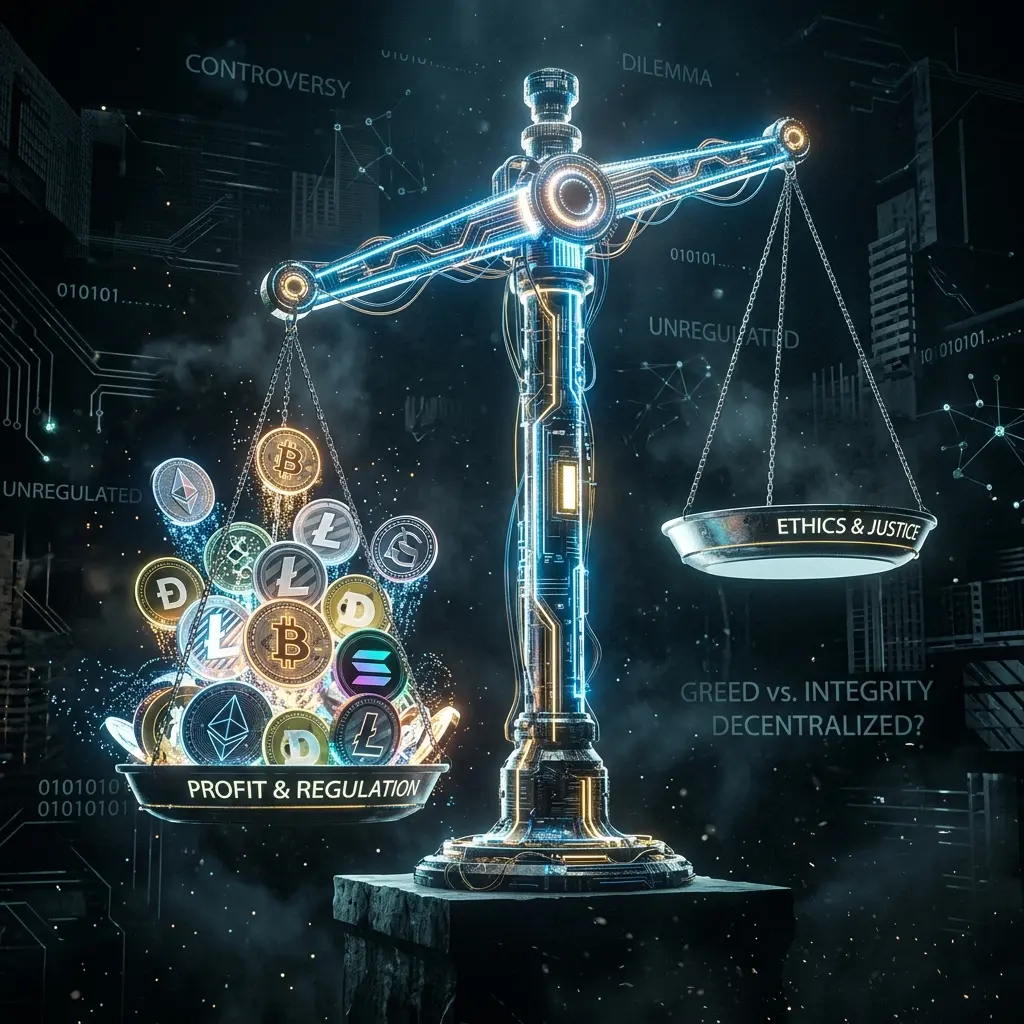
Balanced scale weighing MEV's positive and negative effects on crypto markets
FR
FRB 团队MEV 专家
最近更新
#MEV#Ethics#Debate#Education

Answer first — MEV is controversial because the same mechanism that produces helpful market behavior (arbitrage, liquidations) also enables predatory behavior (sandwich attacks on retail users). Critics argue MEV is a hidden tax on every DEX trader and concentrates power in sophisticated bot operators. Defenders argue MEV is unavoidable on any public blockchain and that legitimate MEV strategies actively improve market efficiency. The 2026 consensus: legitimate MEV is fine; targeting retail flow with sandwich attacks is increasingly seen as crossing an ethical line.

The Critics' Case

1. MEV is a Hidden Tax on Retail

Every time you swap on Uniswap with default slippage, you may pay an invisible cost — a sandwich bot front-runs your trade and dumps after, capturing the slippage. Estimates put cumulative retail MEV losses at $500M–$1.2B since 2022. Most users never see it itemized.

Use our Sandwich Loss Calculator to estimate your personal exposure.

2. It Concentrates Power

Running profitable MEV strategies in 2026 requires:

  • Co-located infrastructure (low-latency)
  • Custom simulation pipelines
  • Capital ($5K minimum, $50K+ to compete in JIT)
  • Engineering talent

This favors institutional desks over individual users. Critics argue this contradicts crypto's "permissionless" promise.

3. It Encourages Censorship

Builders can theoretically exclude transactions for non-MEV reasons (sanctions compliance, OFAC). The MEV-Boost economy creates a censorship vector that didn't exist pre-Merge.

4. It Makes UX Worse

To protect against MEV, casual users must:

  • Use specialized RPCs (Flashbots Protect)
  • Set tight slippage caps
  • Avoid trading large size

This adds friction the average user doesn't sign up for.

The Defenders' Case

1. Arbitrage is Net-Positive

Cross-DEX arbitrage fixes price discrepancies. Without arbitrageurs, ETH could trade at $3,000 on Uniswap and $3,200 on Curve for hours. With them, the gap closes in seconds. Every LP and every trader benefits from honest prices.

The same applies to liquidations — they keep DeFi lending markets solvent. Without prompt liquidations, Aave/Compound would accumulate bad debt.

2. MEV is Unavoidable

As long as:

  • Transactions wait in a public mempool, and
  • Block producers pick ordering

…ordering value can be extracted. You cannot eliminate it on a public blockchain. You can only redistribute it (Flashbots Protect, MEV-Share) or make it worse (no protections at all). The "no MEV" alternative doesn't exist.

3. MEV Subsidizes Validators

Validator rewards on Ethereum post-Merge come from issuance + tips + MEV-Boost payments. MEV revenue increases the security budget without increasing inflation. Lower MEV = lower validator rewards = either lower security or higher fees on users.

4. Bad MEV ≠ All MEV

Sandwich attacks against retail are bad. Cross-DEX arbitrage between two professional market-makers is fine. Lumping them together is intellectually lazy. The right question is "which kinds of MEV should we discourage?" not "should MEV exist?"

Where the 2026 Consensus is Heading

Behavior 2024 view 2026 view
Cross-DEX arbitrage Acceptable Acceptable
Liquidations Acceptable Acceptable
JIT liquidity Debated Mostly acceptable
Backruns on whale trades Acceptable Acceptable
Sandwich attacks against pro market-makers Acceptable Acceptable
Sandwich attacks against retail flow Mixed Increasingly seen as predatory
Generalized frontrunning of all swaps Predatory Predatory
Builder censorship Concerning Concerning

Tools like Flashbots Protect, MEV-Share, and CoW Swap have made it easier for users to opt out of being sandwiched. The norm is shifting toward "protect retail, allow professional MEV."

What FRB Agent's Position Looks Like

FRB Agent's design takes the defenders' view of legitimate MEV (arbitrage, liquidations, JIT, backruns) while explicitly rejecting predatory MEV (sandwich attacks against retail). Specifically:

  • ✅ Cross-DEX arbitrage — supported, encouraged
  • ✅ Liquidations — supported
  • ✅ JIT liquidity — supported
  • ✅ Backruns — supported
  • Sandwich attacks against retail flow — disabled by policy

This isn't legal posturing — it reduces civil liability exposure as US/EU class actions emerge against sandwich-attack patterns. See our regulation hub for jurisdictional details.

Is MEV Going Away?

No. Multiple research efforts (Flashbots SUAVE, application-specific sequencing) aim to redistribute MEV more fairly, not eliminate it. The trajectory:

  • 2022-2024: MEV mostly extracted from public mempools, retail bears most cost
  • 2024-2026: Private bundles + MEV-Share spread, retail can opt out
  • 2026+: Application-specific sequencing (CoW, UniswapX), order-flow auctions, encrypted mempools

Each step makes MEV less predatory but doesn't eliminate it.

The Honest Take

If you trade on DEXes:

  • You're paying some MEV cost whether you know it or not
  • You can reduce it: use protected RPCs, set tight slippage, avoid huge trades on illiquid pools

If you run a MEV bot:

What Individual Operators Should Do

The controversy doesn't make MEV illegal — it makes certain strategies higher-risk from a legal and reputational standpoint. Practical guidance for operators in 2026:

If you run arbitrage or liquidations: You're on the unambiguously legitimate side of the debate. These strategies improve price discovery and protocol health. No serious regulatory interpretation targets them. Continue operating, document your strategies, and maintain clean KYC/AML practices in case of questions.

If you run backruns on large trades: Largely fine. The counterparty is a sophisticated whale whose slippage you're partially capturing after the fact. Regulatory attention is minimal. FRB Agent supports this natively via Jito bundles (Solana) and Flashbots private bundles (Ethereum).

If you're tempted to add sandwich logic: This is the line. US and EU legal theories increasingly characterize retail-targeting sandwich attacks as unfair trading practices — not criminal market manipulation, but civil-action territory. More importantly, it's bad for the ecosystem. FRB Agent disables this by design; operators who want it need to look elsewhere.

Infrastructure regardless of strategy: Use private relays. Even legitimate strategies benefit from private relay routing — zero gas on failed bundles, no public mempool exposure, better inclusion rates. This is table stakes in 2026, not an advanced configuration.

The Emerging Regulatory Landscape

MEV's regulatory status in 2026 is jurisdiction-dependent and strategy-dependent. In the US, no direct MEV-specific legislation exists, but SEC and CFTC jurisdiction over crypto markets is expanding. Cross-DEX arbitrage is generally treated as equivalent to traditional market-making arbitrage — well-understood and not currently targeted. Sandwich attacks on retail flow are in a different category: US and EU class-action theories are developing around front-running characterizations, and while criminal charges haven't materialized, civil liability exposure for operators running systematic retail-targeting strategies is growing.

The UK's Financial Conduct Authority has issued guidance on algorithmic trading that touches MEV-adjacent patterns. Operators running significant sandwich volumes in UK-regulated environments should consult legal counsel.

The broader regulatory trajectory is not "ban MEV" — it's "regulate predatory MEV while leaving arbitrage and liquidations alone." That distinction maps directly onto the ethical divide described above. Operators who stick to arbitrage, backruns, and liquidations are building on solid ground both ethically and legally. Those running retail-targeting sandwich strategies are taking on growing regulatory risk alongside the ethical criticism.

FRB Agent's design choice to disable sandwich strategies by policy reflects both the ethical position and forward-looking regulatory risk management. Legitimate MEV — arbitrage, liquidations, backruns — has no meaningful regulatory threat in any major jurisdiction as of 2026. The controversy around MEV is real but largely confined to one sub-category of strategy.

阅读后的下一步

启动 FRB 控制台

连接您的钱包,通过 6 位 PIN 码配对节点客户端,然后分配上述合约。

需要安装程序?

下载并验证 FRB

获取最新安装程序,将 SHA‑256 与 Releases 对比,然后按照安全启动清单操作。

查看 Releases 和 SHA‑256
分享𝕏 推特in LinkedInf Facebook

相关文章

延伸阅读与工具

讨论

暂无笔记。添加第一条观察,或在以下平台与团队分享链接 X (@MCFRB).

留下笔记
笔记仅存储在您的本地浏览器中。

掌控脉动

扩展您的执行能力

通过探索完整的 FRB 工具包来最大化您的优势。从机构级遥测到随时可导出的策略脚本。

CTA

安装 FRB 代理

下载经过验证的 Windows 版本并检查 SHA-256。

CTA

阅读快速入门文档

与运营和合规团队分享 15 分钟的设置流程。

CTA

启动控制面板

配对节点客户端并实时监控 Ops Pulse。

准备进化了吗?

迈出下一步

无论您是在验证终端安全,还是在启动您的第一个交易包,FRB 之旅都从这里开始。

推荐

安装 FRB 代理

安全的 Windows 版本,通过 SHA-256 验证以确保最高完整性。

推荐

阅读快速入门文档

15 分钟掌握设置流程:从钱包配对到第一个交易包。

推荐

启动控制面板

实时监控您的 Ops Pulse 并管理交易路由。