Solana
Simulated route
$124.50 model
Example
Ethereum
Private bundle
$840.12 model
Example
BNB
Liquidation test
$45.20 model
Example
Base
Arbitrage test
$12.05 model
Example
Solana
Jito bundle
$310.00 model
Example
Polygon
Route check
$8.45 model
Example
Solana
Simulated route
$124.50 model
Example
Ethereum
Private bundle
$840.12 model
Example
BNB
Liquidation test
$45.20 model
Example
Base
Arbitrage test
$12.05 model
Example
Solana
Jito bundle
$310.00 model
Example
Polygon
Route check
$8.45 model
Example
InfraEvaluation 阶段⏱ 5 分钟阅读

Best WSS Endpoints for Polygon (2026)

**Answer first** — Polygon PoS is one of the few remaining high-volume EVM chains with a working public mempool plus PBS-style bundle infrastructure (FastLane Atlas) running on top

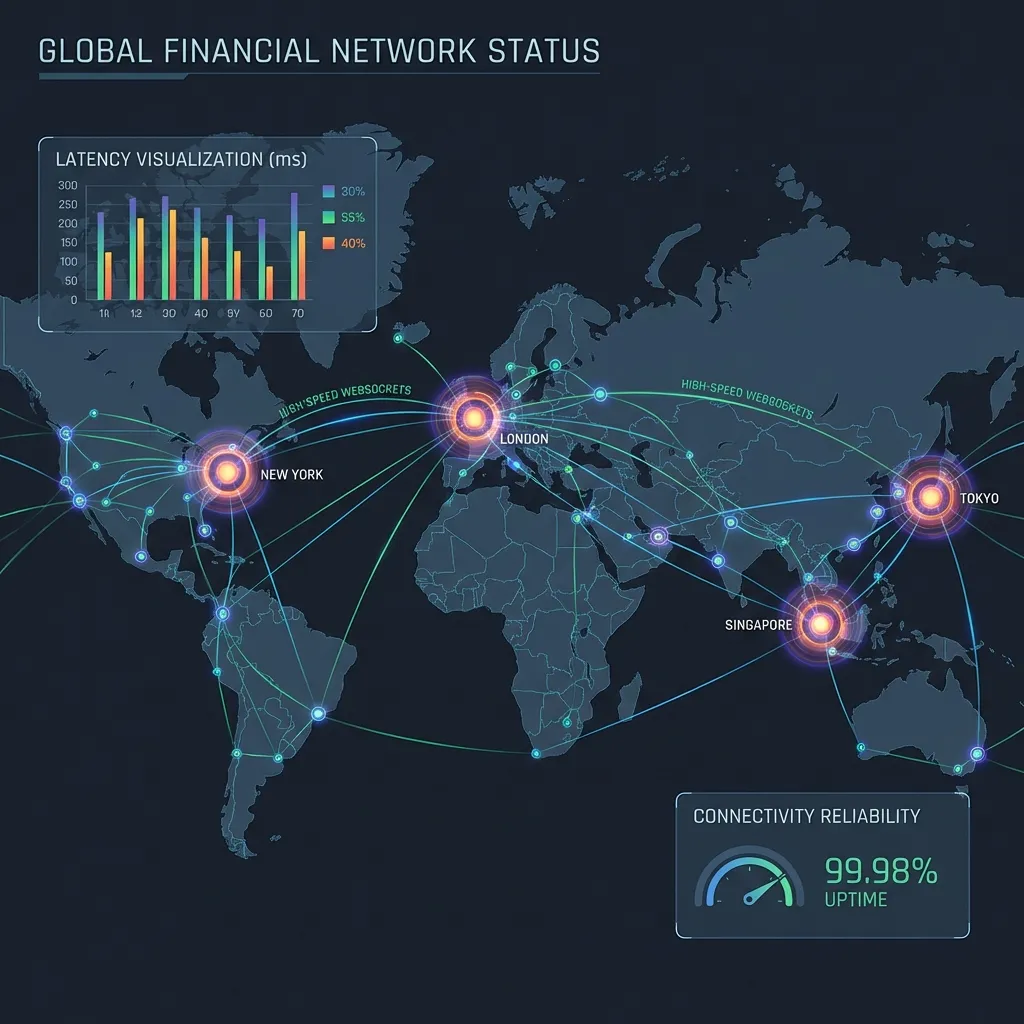
Polygon WSS latency and endpoints
FR
FRB 团队MEV 专家
最近更新
#polygon#wss#latency#benchmark#fastlane

Answer first — Polygon PoS is one of the few remaining high-volume EVM chains with a working public mempool plus PBS-style bundle infrastructure (FastLane Atlas) running on top of it. WSS endpoint choice on Polygon has direct PnL impact: 2-second blocks mean a 200 ms latency advantage often decides who wins a contested backrun. The 2026 stack: a commercial private RPC for both reads and writes (QuickNode, Alchemy, Chainstack, BlockPi all serve Polygon competently), FastLane endpoints for atomic-bundle submission, and ideally a self-hosted Bor node co-located near the validator gravity centre (currently AWS us-east-1 and parts of EU) once volume justifies the hardware. Public RPC at polygon-rpc.com is fine for reads only — it'll throttle a production strategy fast.

Mastery path

Why Polygon WSS choice matters more than on L2s

Polygon PoS uses a Heimdall + Bor architecture — a sidechain to Ethereum, not a rollup. The relevant differences from L2s like Arbitrum or Base:

  • Public mempool with peer broadcast: eth_subscribe('newPendingTransactions') against any well-connected node works as expected. Validators and searchers see roughly the same view.
  • 2-second block time: the entire window from "tx visible" to "tx mined" is short. A WSS subscriber that's 200 ms slow is a third of a block behind.
  • FastLane Atlas on top: atomic bundle submission via a PBS-style auction sits on Polygon's validator set. Coverage is partial (not 100% of validators participate); your bundle lands only if a participating validator proposes the next block.

So Polygon WSS quality determines both what you see (mempool subscription) and how fast you can act on it (write latency to your sender). Both halves matter.

Provider landscape

Provider Type Typical p95 latency (in-region) Right use case
QuickNode Commercial 25–50 ms Mature Polygon support; strong default
Alchemy Commercial 25–60 ms Solid devtooling, decent rate limits
Chainstack Commercial 30–60 ms Competitive on price for the latency band
BlockPi Commercial 35–70 ms Useful in fan-out
Ankr Premium Commercial 35–70 ms Reliable secondary
GetBlock Commercial 40–80 ms Redundancy slot
FastLane endpoints PBS infra Latency depends on validator rotation For bundle submission; pairs with any RPC for reads
Public Polygon RPC (polygon-rpc.com) Free 80–200 ms + rate limits Reads only, never production
Self-hosted Bor + Heimdall Hardware 5–15 ms read, ~20 ms write Volume strategies; pays back at scale

(Numbers vary by region; benchmark from your actual deployment with the WSS latency test before committing.)

The validator-gravity point matters: Polygon's validator set isn't uniformly distributed globally. If your strategy targets DEXes whose flow concentrates in specific regions, co-locate accordingly. A node in us-east-1 will outperform the same hardware in ap-southeast-1 for most Polygon strategies.

What to measure on Polygon specifically

Three measurements with direct trade-PnL implications:

  1. Mempool coverage. Count distinct pending hashes seen across two parallel WSS subscriptions over 60 seconds. If one subscription is consistently behind the other by >10%, you're missing opportunities — that's an under-peered upstream, not noise.
  2. Time from pending event to inclusion. A healthy provider shows you a tx and that tx is in the chain within 1–2 blocks (~2–4 seconds). Sustained drift past that is degradation.
  3. Reorg observation rate. Polygon reorgs more than Ethereum mainnet. Wait at least 8 blocks before treating any inclusion as final for accounting purposes. A spike in reorgs during your session is a signal to pause new sends, not push through.

Rotation policy

  • Baseline p50/p95 for each endpoint in your deployment region during a calm window. Document.
  • Alert at 50%+ degradation from baseline sustained for 5+ minutes.
  • Switch both reads and writes when rotating — don't leave a fast write endpoint backrunning stale reads.
  • Keep the rotated-out endpoint warm at low rps for 30 minutes for cheap rollback.

Polygon-specific gotchas

  • Validator set degradation. Occasional missed blocks mean inclusion latency balloons. If you see 3+ missed blocks per 100, treat it as systemic and pause.
  • POL-migration leftovers. During the original MATIC → POL token migration, several RPC providers had inconsistent token-symbol handling. Verify your client is on a current build before debugging "why does my route fail on what looks like a normal pair."
  • bsc-dataseed-style throttling on polygon-rpc.com. During NFT mints and memecoin storms the official public RPC throttles fast. Anything time-sensitive must be on a paid endpoint.
  • FastLane participation gaps. Bundle submission to FastLane only lands if a participating validator proposes the next block. Always pair FastLane with a public-mempool fallback (capped) so non-participating slots don't dead-end your strategy.
  • Cross-region failover that quietly halves your edge. Failing over from us-east-1 to ap-southeast-1 adds ~100 ms each direction. Alarm on latency, not just on hard failures.

Working configuration in 2026

Realistic Polygon-MEV endpoint stack for a serious operator:

  • Primary read: Self-hosted Bor node co-located in us-east-1 with strong peer count, subscribed to mempool locally.
  • Secondary read (validation): Tier-1 commercial WSS in same region; cross-check coverage against the local node.
  • Primary write: FastLane endpoint for atomic-bundle submission, paired with a tier-1 commercial RPC for non-FastLane sends.
  • Tertiary write: Different commercial provider in different region as outage hedge.

For lower-volume operators (under ~$2K/day attributable MEV), drop the self-hosted node and run two tier-1 commercial WSS in parallel for the same coverage-validation benefit at ~10% the operational complexity.

Polygon's Transition to AggLayer and MEV Implications

Polygon's roadmap includes a major architectural transition from standalone PoS to participation in the AggLayer — a unified liquidity and settlement layer that will aggregate multiple Polygon zkEVM chains. This transition has MEV implications that operators on Polygon PoS should be aware of now:

Near-term (2026): Polygon PoS continues to operate as a standalone PoS chain. MEV strategies on Polygon PoS today are not affected by AggLayer — the transition is a longer-term roadmap item. Current WSS endpoint configurations remain valid.

Medium-term (2027+): As Polygon zkEVM chains join AggLayer, cross-chain liquidity between them becomes atomic from a settlement standpoint. This creates cross-chain MEV opportunities that don't exist today — price discrepancies between different Polygon zkEVM chains could be captured in single atomic transactions via AggLayer's unified proving system.

What to watch in 2026: FastLane's evolution on Polygon. FastLane provides Polygon's primary MEV-protection and bundle-inclusion infrastructure. Any changes to FastLane's relationship with Polygon PoS validators (as the network transitions) directly affect MEV operator relay configurations. Follow FastLane's documentation for updates.

For 2026 operations, Polygon PoS is stable and the strategies described above remain valid. The AggLayer transition is a 2027+ consideration — don't reconfigure for it yet, but maintain awareness.

References

阅读后的下一步

启动 FRB 控制台

连接您的钱包,通过 6 位 PIN 码配对节点客户端,然后分配上述合约。

需要安装程序?

下载并验证 FRB

获取最新安装程序,将 SHA‑256 与 Releases 对比,然后按照安全启动清单操作。

查看 Releases 和 SHA‑256
分享𝕏 推特in LinkedInf Facebook

相关文章

延伸阅读与工具

讨论

暂无笔记。添加第一条观察,或在以下平台与团队分享链接 X (@MCFRB).

留下笔记
笔记仅存储在您的本地浏览器中。

掌控脉动

扩展您的执行能力

通过探索完整的 FRB 工具包来最大化您的优势。从机构级遥测到随时可导出的策略脚本。

CTA

安装 FRB 代理

下载经过验证的 Windows 版本并检查 SHA-256。

CTA

阅读快速入门文档

与运营和合规团队分享 15 分钟的设置流程。

CTA

启动控制面板

配对节点客户端并实时监控 Ops Pulse。

准备进化了吗?

迈出下一步

无论您是在验证终端安全,还是在启动您的第一个交易包,FRB 之旅都从这里开始。

推荐

安装 FRB 代理

安全的 Windows 版本,通过 SHA-256 验证以确保最高完整性。

推荐

阅读快速入门文档

15 分钟掌握设置流程:从钱包配对到第一个交易包。

推荐

启动控制面板

实时监控您的 Ops Pulse 并管理交易路由。